

A research staff-style robotics lab for members who want to build, test, document, and lead.
The AiTWobo Robotics Research Program is designed as a serious but accessible research environment where members meet weekly to explore robotics, engineering, artificial intelligence, electronics, software, design, and emerging technologies. It is not only a club activity; it is a structured lab pathway where participants practice how real research teams think, plan, test, document, and communicate.
Each meeting helps members move from curiosity to contribution. Participants learn how to identify problems, ask research questions, review existing technologies, design possible solutions, build prototypes, test results, record evidence, and transform their work into public reports, tutorials, demos, posters, and showcase presentations.
The program also supports AiTWobo’s larger mission to shape the future through robotics by preparing members to become builders, mentors, researchers, technical writers, project leaders, and community technology ambassadors. Members can contribute even if they are beginners, because the program separates work into research, software, electronics, CAD, fabrication, documentation, presentation, and outreach roles.
Research
Questions, notes, briefs, and technology reviews.Prototype
Circuits, robots, CAD, sensors, and software tests.Publish
Reports, posters, guides, demos, and showcases.


What makes this program different?
Members learn how to think like robotics researchers: ask clear questions, compare solutions, test ideas, document evidence, and communicate results.
Every member is encouraged to contribute to a real project such as a rover, AI vision demo, education kit, sensor system, or automation prototype.
Experienced members and mentors review designs, guide debugging, support technical writing, and help members prepare for showcases.
The program turns internal work into public resources: tutorials, project pages, research notes, posters, demos, and community workshops.
Public project board for ongoing research.

Autonomous Rover Prototype
Obstacle detection, path planning, sensor fusion, and modular chassis design.

AI Vision Sorting System
Camera-based object recognition for educational automation demonstrations.

Smart Greenhouse Robot
Monitoring humidity, soil, temperature, and automated plant-care actions.

Robotics Learning Kit
A low-cost robotics kit for schools, clubs, and beginner AiTWoboian training.
Weekly activity structure.
The research program can use this section as a public activity dashboard for meetings, workshops, demos, experiment logs, photos, and research reviews.
Research discussion, project progress, and task planning.
Members present prototypes, experiments, and blockers.
Review project impact, publish updates, and select showcase projects.
Brainstorming & Problem Discovery
Define real-world problems and transform them into robotics research questions.
Literature & Technology Review
Discuss articles, videos, tutorials, datasheets, and engineering references.
Experimentation
Test sensors, circuits, algorithms, robotic components, and prototype ideas.
Technical Documentation
Prepare lab notes, diagrams, reports, project pages, and presentation materials.
Project Sprint Review
Review progress, assign tasks, evaluate blockers, and plan next experiments.
Demo & Showcase Practice
Prepare public demonstrations, videos, posters, and final project presentations.
Visual updates from meetings, experiments, and documentation sprints.
 Research discussion
 Electronics testing
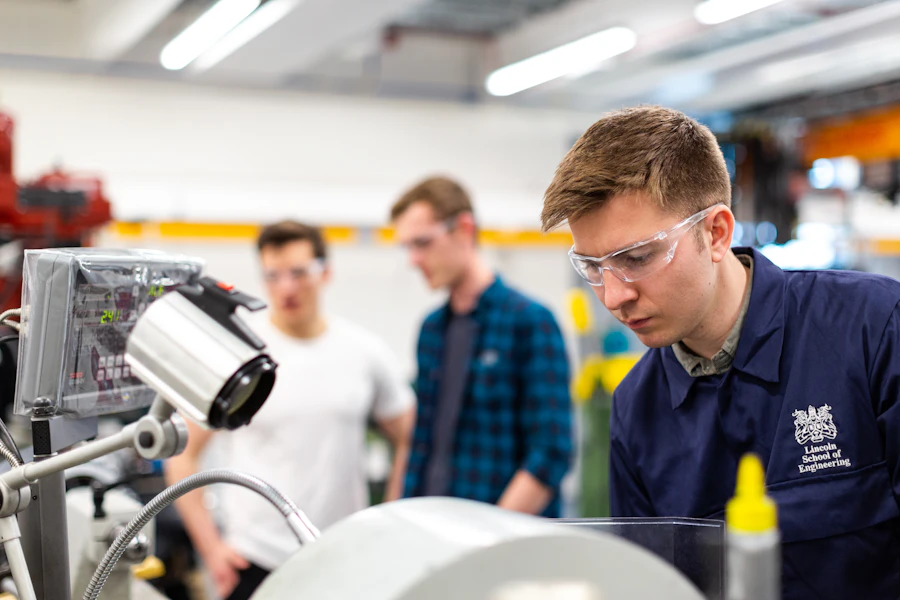 Prototype review
 Documentation sprint
Technical tracks members can explore.
Robotics Design
Robot structure, mechanisms, mobility, actuators, and system architecture.
Artificial Intelligence
Machine learning, decision-making systems, model testing, and responsible AI use.
Embedded Systems
Arduino, Raspberry Pi, microcontrollers, sensors, communication, and control systems.
Computer Vision
Image processing, object detection, camera systems, and robotics perception.
Electronics & Circuits
Breadboarding, prototyping, power management, motor drivers, and PCB concepts.
Automation
Autonomous navigation, robotic workflows, industrial automation, and smart systems.
CAD & Fabrication
Onshape, 3D modeling, 3D printing, laser cutting, and mechanical documentation.
Renewable Energy Robotics
Energy-aware robotics, solar-powered systems, and sustainability projects.
Everything a public research lab page needs.
Research Briefs
Publish short research notes, technical summaries, and weekly meeting reports.
Project Repository
Display active projects, milestones, demo links, GitHub links, and documentation.
Member Directory
Highlight members, mentors, researchers, team roles, and contribution areas.
Lab Schedule
Show weekly meetings, workshops, sprint reviews, and research presentation days.
Equipment Catalog
List tools, sensors, kits, boards, software, lab resources, and safety rules.
Mentor Office Hours
Provide mentor access, guidance sessions, review meetings, and project feedback.
Activity Feed
Share announcements, achievements, experiment logs, photos, videos, and updates.
Publication Board
Organize papers, posters, research outputs, slide decks, and public reports.
Safety & Ethics
Teach responsible robotics, lab safety, documentation integrity, and AI ethics.
Research outputs and reports.
Track growth publicly.
12+
Research Topics4
Active Projects3
Public Outputs100%
Documented WorkResearch team structure.
| Role | Purpose | Dashboard Feature |
|---|---|---|
RResearch Coordinator |
Organizes research meetings, tracks goals, and supports documentation quality. | Assignable |
TTechnical Lead |
Guides engineering decisions, reviews prototypes, and supports debugging. | Assignable |
AAI / Software Member |
Builds algorithms, simulations, interfaces, and automation logic. | Assignable |
EElectronics Member |
Works on circuits, sensors, wiring, testing, and power systems. | Assignable |
CCAD / Fabrication Member |
Designs parts, robot frames, enclosures, and printable components. | Assignable |
DDocumentation Member |
Writes reports, tutorials, lab notes, and public project summaries. | Assignable |
From new member to research mentor.
This pathway helps visitors understand exactly how members enter the program, contribute to projects, and grow into leadership.
Research Growth Map
Orientation → Research → Prototype → Publish → Mentor
Become an AiTWoboian
Join AiTWobo and complete orientation before participating in research activities.
Attend Weekly Meetings
Participate in brainstorming, technical discussion, project updates, and planning.
Join a Research Track
Choose robotics design, AI, electronics, coding, CAD, sensors, or documentation.
Contribute to a Project
Work with a team to build prototypes, test ideas, document results, and present progress.
Publish & Present
Share research notes, posters, demos, reports, and showcase-ready project outcomes.
Mentor Others
Experienced members may guide new members and support AiTWobo learning programs.
Lab resources members may use.
Responsible robotics culture.
- Use safe voltages and supervised testing for motors, batteries, and moving parts.
- Document experiments honestly, including failures, risks, and limitations.
- Respect privacy and avoid harmful AI, surveillance, or unsafe robotics use.
- Credit contributors, mentors, references, datasets, and open-source tools.